Conflict is inevitable in any workplace. What truly matters is how it is handled. At Mediation NI, we help leaders and teams meet conflict early with skill, openness, and empathy, turning challenging situations into opportunities for growth.
Different Paths, Same Purpose
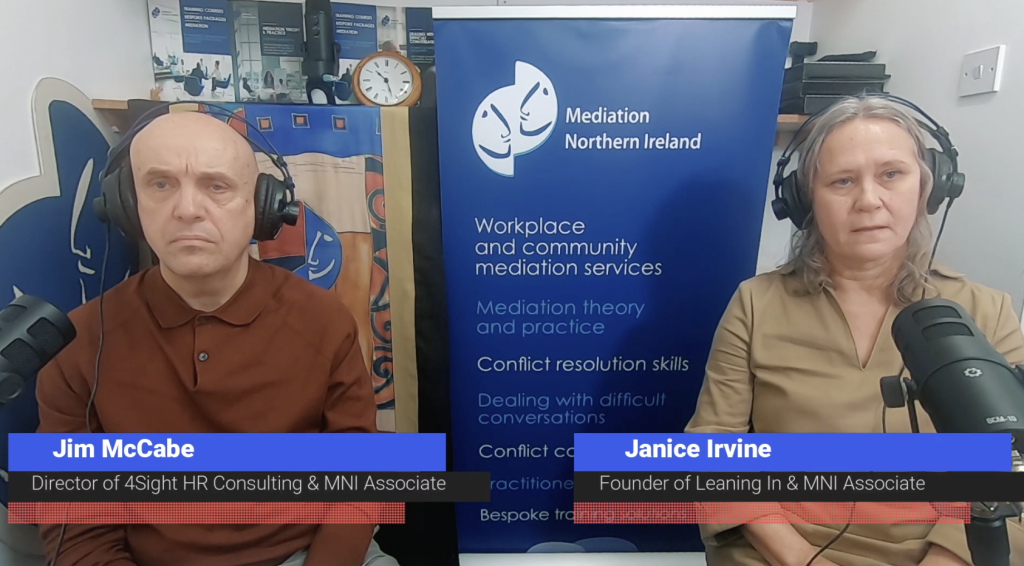
Jim McCabe and Janice Irvine both began their careers in human resources, but their journeys were very different.
Jim started at the Fair Employment Commission (now Equality Commission), training employers and trade unions in equality legislation. Working through high-profile cases, he saw firsthand how conflict and organisational change could affect people, processes, and productivity.
Janice began in the steel industry, moving from a personal assistant role to HR manager. She experienced large-scale organisational change, including site consolidations and structural shifts, learning the impact of change and uncertainty on employees.
Despite their different backgrounds, both discovered a shared theme: people come before process. This perspective continues to shape their approach to mediation today.
Discovering Mediation
Both Jim and Janice found that traditional HR processes, such as grievance procedures and workplace investigations, often create a “zero-sum game” with winners and losers. They sought a more constructive approach and discovered mediation.
The strength of mediation – and what truly sets it apart – is how it is intended to help guide people to find their own resolutions. Through training at Mediation NI, both Jim and Janice learned how to facilitate dialogue, build trust, and empower parties to resolve disputes collaboratively.
The Skills That Matter
Mediation combines empathy, active listening, and structured facilitation. Key skills include:
- Active listening: Ensuring all parties feel heard and understood.
- Facilitating dialogue: Helping participants move from positions to interests and needs.
- Creating safe spaces: Encouraging open conversation without fear of judgment.
- Practical application: Learning through role-play, observation, and co-mediation exercises.
These skills are not only relevant in mediation sessions but transferable across workplaces, helping managers handle everyday challenges and complex conflicts alike.
Conflict as a Positive Force
Conflict often carries a negative connotation, but when handled effectively, it can be constructive. Both Jim and Janice emphasise that:
- Conflict can improve innovation and collaboration.
- Early intervention prevents escalation, saving time, money, and relationships.
- Understanding emotions in conflict enhances leadership and team effectiveness.
Addressing conflict proactively strengthens workplace culture and helps teams perform at their best.
The Road Ahead
Workplaces are changing, with hybrid teams, generational differences, and well-being pressures. Mediation NI is evolving to meet these challenges, offering both open-access and tailored training courses that equip leaders and teams to handle conflict effectively.
Our courses are designed to meet the needs of any group or individual:
- Open-access courses – join as an individual or small group.
- Tailored training – designed specifically for your organisation or group.
- Independent accreditation – available for most of our courses.
- Additional learning support – where needed, to help participants succeed.
Our training is designed to build long-term skills in communication, conflict management, and understanding. Whether you are a team leader, teacher, youth worker, or simply someone who wants to strengthen your ability to handle conflict, mediation training provides tools that last a lifetime. By choosing a course that matches your needs, you can build confidence in addressing conflict constructively and improve how people work together.
Register or reach out today.