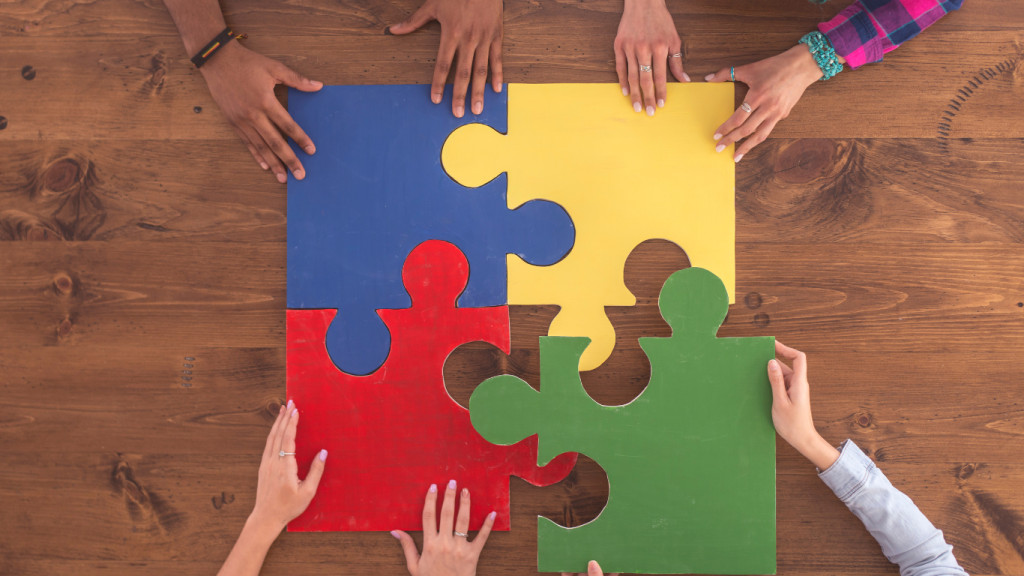
Conflict in the workplace or community can feel overwhelming, but it often follows recognisable patterns. At Mediation NI, we use a simple but powerful model called the Conflict Puzzle. This tool helps people unpack the different elements of a conflict and gain new insight into how to address it constructively. By looking at four key areas – behaviour, emotions, issues, and relationships – the puzzle provides a clear way to understand and work through disagreements.
Behaviour: The First Signs of Conflict
Conflict often shows itself through behaviour. This can mean obvious changes, such as raised voices or silence, but it can also be more subtle. For example, consider a workplace situation where two colleagues – we’ll name them Angela and Ben – disagree on the priorities for a plan. After a difficult team meeting, Ben stops speaking directly with Angela and begins communicating only through email. Angela, in turn, copies their line manager into her replies.
These shifts in behaviour indicate that something has changed in their working relationship. By noticing these changes, we begin to see the first piece of the conflict puzzle. Guidance from ACAS shows how even small changes in behaviour can be early signs of deeper workplace tensions.
Emotions and Issues: What Lies Beneath the Surface
The second piece of the puzzle is emotions. Conflict usually stirs strong feelings. In Angela’s case, receiving emails instead of direct communication leaves her feeling anxious, frustrated, and annoyed. These emotions influence how she interprets Ben’s behaviour and how she responds. Support from organisations like Mind UK highlights how workplace stress and conflict can have a real emotional impact.
The third piece is the issues at the heart of the conflict. Here, Angela might identify two main concerns: how the team makes decisions and how colleagues manage disagreements without harming their working relationships. These issues go beyond the behaviour itself and reveal what truly matters to the people involved.
Relationships: The Wider Picture
The fourth piece of the puzzle is the relationship. Who is involved, who is affected, and what dynamics shape the situation? In Angela and Ben’s case, their line manager and other team members are also impacted. Factors such as length of service, expertise, and communication style may create power differences that shape how the conflict plays out.
It also helps to consider the past, present, and future of the relationship. If Angela and Ben have a history of tension, this dispute may feel like another chapter in an ongoing story. If they usually work well together, the conflict may come as a surprise. Thinking about the future is equally important, whether they will continue to work together long-term or soon go separate ways will affect how much energy they put into resolving the situation.
By paying attention to all four pieces – behaviour, emotions, issues, and relationships – the Conflict Puzzle offers a way to move beyond surface-level management and towards deeper understanding. CIPD research shows that strengthening relationships is central to building healthier workplaces.
Putting the Conflict Puzzle into Practice
The Conflict Puzzle is not only useful for mediators. Anyone can use it to reflect on a disagreement in their own life. A helpful exercise is to divide a page into four sections and write down:
- What behaviours you noticed
- What emotions you experienced
- What issues were involved
- How you would describe the relationship, including factors such as power, history, and who else is affected
You can then repeat the exercise from the other person’s perspective, imagining how they might have seen and felt about the situation. This practice encourages empathy and can highlight new ways forward.
Training for Handling Conflict
At Mediation NI, we believe that conflict resolution skills benefit individuals, teams, and communities. Our training helps people understand conflict responses and apply them in real-world situations. We provide courses at different levels, from introductory to advanced, and they can be delivered in a way that suits your needs and timescales.
We offer:
- Open-access courses – join as an individual or small group.
- Tailored training – designed specifically for your organisation or group.
- Independent accreditation – available for most of our courses.
- Additional learning support – where needed, to help participants succeed.
Our training is designed to build long-term skills in communication, conflict management, and understanding. Whether you are a team leader, teacher, youth worker, or simply someone who wants to strengthen your ability to handle conflict, mediation training provides tools that last a lifetime. By choosing a course that matches your needs, you can build confidence in addressing conflict constructively and improve how people work together.
Register or reach out today.